 Skip to content
Sustainable Feed Additive Market Trends 2026: Future of Green Livestock Nutrition Industry
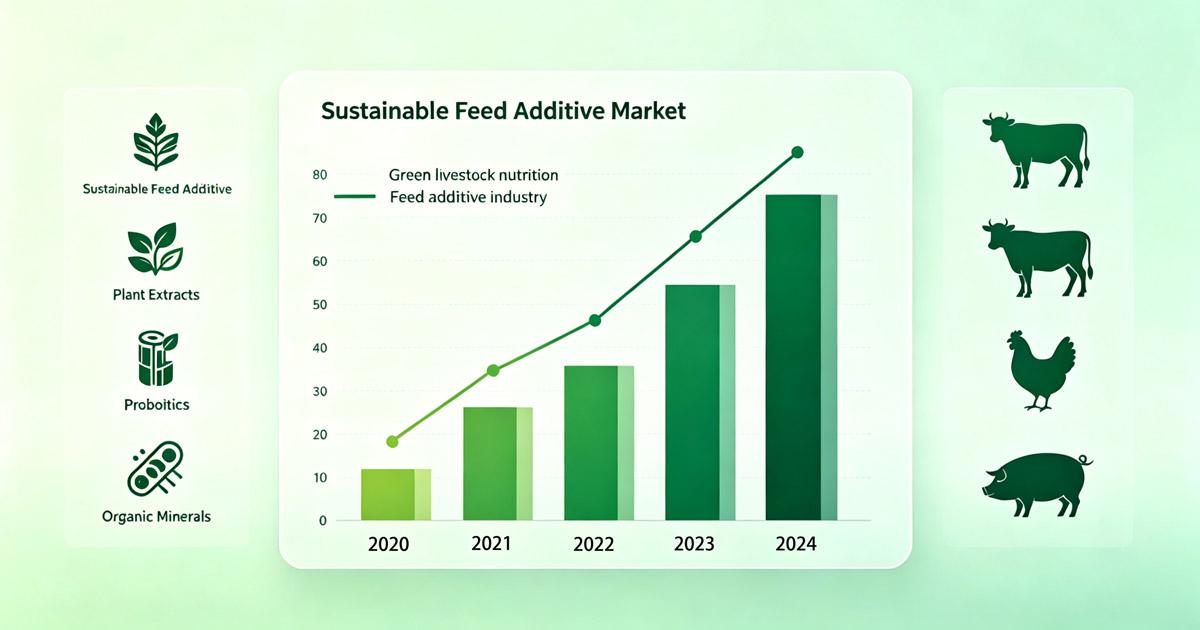
Sustainability has moved from a niche consideration to a central concern across livestock nutrition. Producers, feed manufacturers, and retailers increasingly look for ingredients that support both animal performance and broader environmental goals. Following current sustainable feed additive market trends helps industry buyers anticipate where the sector is heading.
What’s Driving the Shift Toward Sustainable Feed
Several forces are pushing the industry in this direction. Consumer demand for lower-impact animal products continues to grow in many major markets. Retailers and food brands are responding by setting sustainability targets that extend back into their supply chains. Feed represents a significant share of livestock production’s environmental footprint, which makes it a natural focus area for improvement.
Regulatory pressure plays a role too. Some regions have introduced reporting requirements around emissions and resource use in agriculture. This encourages producers to seek feed additives that can measurably reduce environmental impact.
Categories of Sustainable Feed Additives Gaining Traction
Several additive categories are seeing increased interest. Methane-reducing feed additives for cattle have attracted significant attention, given ruminant methane’s outsized contribution to agricultural emissions. Enzyme additives that improve nutrient digestibility are also gaining ground, since better digestion can reduce the total feed volume needed per unit of output.
Alternative protein sources, including insect meal and single-cell proteins, continue to develop as replacements for traditional feed ingredients with heavier environmental footprints. Additionally, additives that improve feed conversion efficiency indirectly support sustainability goals by reducing the resources needed per unit of animal growth.
Balancing Sustainability With Performance
A common concern among producers is whether sustainable additives can match the performance of conventional options. In many cases, the answer depends heavily on formulation and dosing. Buyers should request performance data specific to their target species and production system, rather than assuming general sustainability claims translate directly into equivalent results on their operation.
What This Means for Sourcing Decisions
As this market matures, buyers should expect more third-party certifications and standardized sustainability metrics to emerge. Working with suppliers who can provide transparent sourcing information, including raw material origin and production methods, will likely become increasingly important for meeting downstream customer expectations.
Frequently Asked Questions
Do sustainable feed additives cost more than conventional options?
Pricing varies by category and supplier. Some sustainable additives carry a premium, though improved feed efficiency can offset costs over time in certain applications.
Which livestock sectors are adopting these additives fastest?
Cattle production has seen particularly strong interest, largely due to methane-reduction additives, though poultry and swine sectors are also expanding sustainable ingredient use.
Get in Touch
Our team supplies a range of feed additive raw materials, including options aligned with evolving sustainability requirements, backed by full documentation.
Contact us today to discuss your feed program goals.