 Skip to content
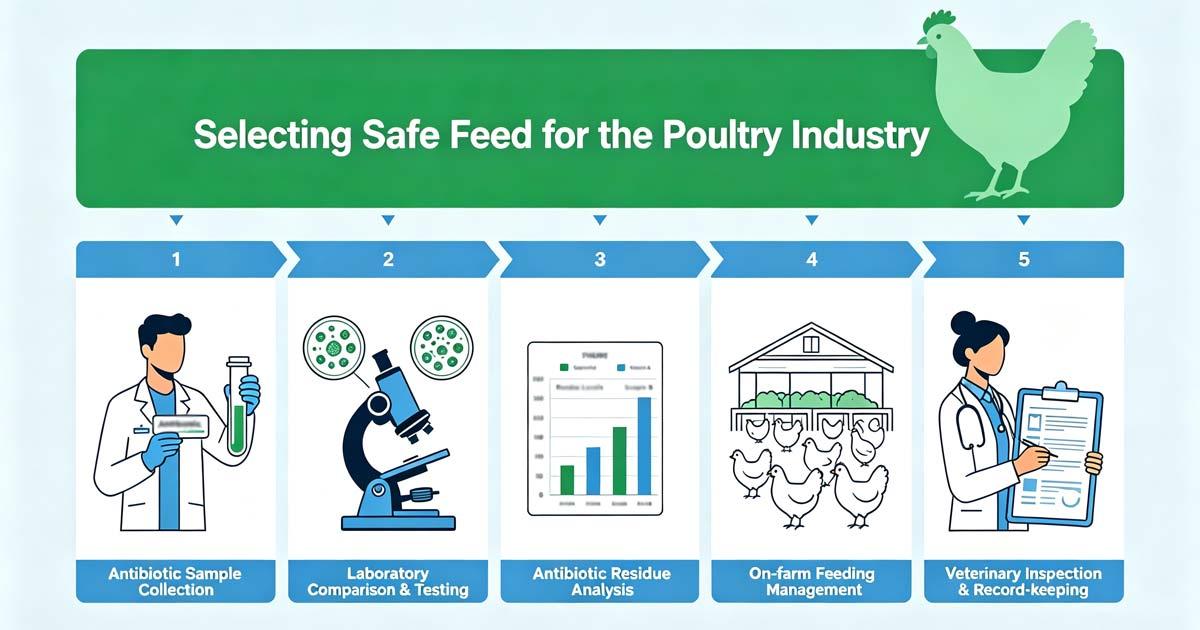
How to Select Safe Feed Antibiotics for Poultry Farming
Feed antibiotic selection directly affects flock health outcomes, regulatory compliance, and ultimately consumer safety in poultry products. Understanding how to evaluate safe feed antibiotics for poultry helps producers make sound sourcing and formulation decisions.
Start With the Specific Health Challenge
Different feed antibiotics address different concerns, from coccidiosis prevention to general growth support to specific bacterial disease management. Identifying the actual health challenge a flock faces, ideally with veterinary input, should guide antibiotic selection rather than defaulting to a single familiar option across all situations.
Confirm Regulatory Approval for Your Market
Approved feed antibiotics and permitted usage levels vary significantly by country, and some ingredients face restrictions or outright bans in certain regions. Producers should confirm current regulatory status for any feed antibiotic under consideration, particularly important for operations exporting finished poultry products to markets with different regulatory standards than their home country.
Evaluate Withdrawal Period Requirements
Feed antibiotics typically carry withdrawal periods, a required interval between last antibiotic administration and slaughter, to ensure residues fall below safety thresholds in the final food product. Producers need to factor withdrawal periods into their production timeline planning, since failing to observe these periods can result in product rejection or regulatory penalties.
Consider Resistance Management Practices
Using the same antibiotic continuously across production cycles can contribute to resistance development in bacterial or parasitic populations on a farm. Many producers rotate between different antibiotic classes or modes of action across cycles as part of a broader resistance management strategy, guided by veterinary recommendations.
Verify Raw Material Quality and Documentation
Feed antibiotics should come from GMP-compliant manufacturers who can provide Certificates of Analysis confirming potency and purity for each batch. Inconsistent raw material quality can lead to under-dosing, reducing treatment effectiveness, or over-dosing, raising both cost and residue concerns.
Balance Antibiotic Use With Alternative Approaches
Given increasing regulatory and consumer scrutiny of antibiotic use in poultry, many producers now combine targeted antibiotic use with supportive alternatives such as probiotics or organic acids, aiming to reduce overall antibiotic reliance while still maintaining flock health and performance.
Frequently Asked Questions
How do withdrawal periods affect production planning?
Producers need to schedule the final antibiotic administration far enough before slaughter to ensure residues fall below required safety thresholds, which varies by specific antibiotic and regulatory requirement.
Should producers use the same feed antibiotic every cycle?
Rotating between different antibiotic classes, guided by veterinary advice, can help manage resistance development compared to relying on a single option continuously across all production cycles.
Get in Touch
We supply GMP-grade feed antibiotic raw materials with full documentation to support safe, compliant poultry feed formulation.
Contact us today to discuss your sourcing requirements.