 Skip to content
How to Choose Packaging for Active Skincare Ingredients
Active ingredients drive much of the skincare industry’s innovation, but many of the most effective actives are also among the most unstable once formulated. Understanding how to choose the right packaging for active skincare ingredients helps brands preserve the potency they’ve worked to formulate.
Identify the Specific Sensitivity of Your Active
Different active ingredients degrade through different mechanisms. Vitamin C and certain antioxidants are primarily oxygen-sensitive, degrading upon air exposure. Retinoids and certain botanical extracts are often light-sensitive, breaking down under UV or visible light exposure. Some actives face both sensitivities simultaneously, requiring a more comprehensive protective approach.
Addressing Oxygen Sensitivity
For oxygen-sensitive actives, airless pump or airless jar packaging offers the most direct protection, since these mechanisms prevent air from entering the container as product is dispensed. This significantly reduces the oxidation exposure that standard pump or open-jar formats allow with each use.
Addressing Light Sensitivity
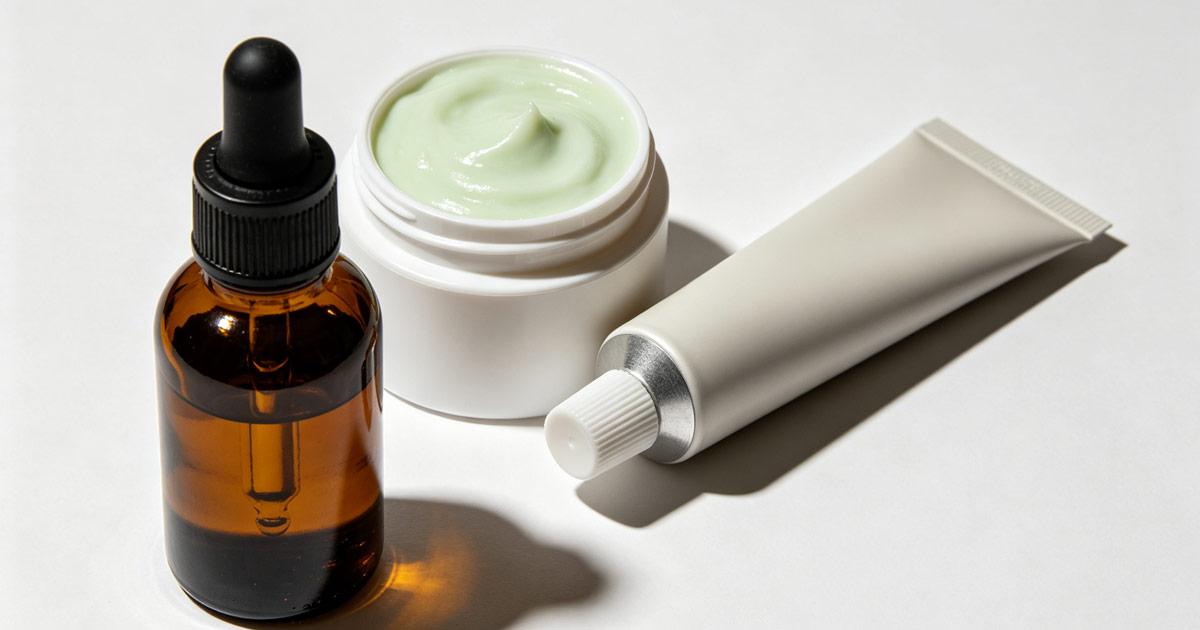
For light-sensitive actives, amber-tinted glass or plastic packaging filters out much of the ultraviolet and visible light responsible for degradation. Brands can also add opaque secondary packaging, such as boxes, for additional protection during storage and retail display before a product reaches the consumer.
Combining Protective Features for Maximum Stability
Formulas facing both oxygen and light sensitivity often benefit from combining protective features, such as an amber-tinted airless bottle, providing comprehensive protection against both primary degradation pathways simultaneously rather than addressing only one risk factor.
Formulation Support Alongside Packaging
Packaging alone cannot fully compensate for an inherently unstable formula. Brands should work with formulation chemists to incorporate stabilizing ingredients and appropriate pH balancing alongside packaging decisions, treating protective packaging as one part of a broader stability strategy rather than a complete solution on its own.
Testing Real-World Stability
Brands should conduct stability testing using the actual finished packaging under realistic storage and light exposure conditions, rather than assuming a packaging format’s general reputation guarantees adequate protection for their specific formula and active ingredient concentration.
Balancing Protection With Cost and Aesthetics
More comprehensive protective packaging typically costs more and may involve aesthetic trade-offs, such as reduced product visibility with amber tinting. Brands should weigh actual stability needs against these practical considerations rather than defaulting to maximum protection regardless of formula requirements.
Frequently Asked Questions
Do all active ingredients need airless packaging?
No, only actives with genuine oxygen sensitivity benefit meaningfully. Light-sensitive but oxygen-stable actives may only need amber tinting rather than a full airless system.
Can packaging fully prevent active ingredient degradation?
No, packaging significantly reduces degradation risk but works best alongside sound formulation practices, including appropriate stabilizers and pH balancing.
Contact Our Team
We supply a range of protective packaging options designed to preserve active skincare ingredient stability throughout a product’s shelf life.
Contact us today to discuss your formula’s packaging needs.