 Skip to content
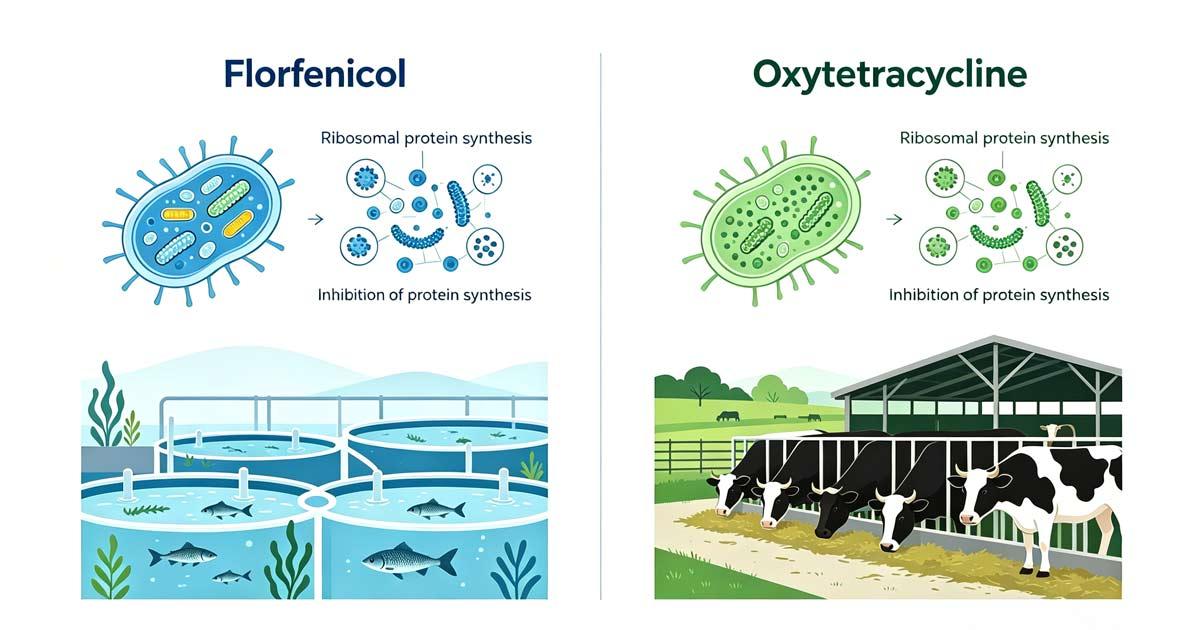
Florfenicol vs Oxytetracycline: Antibiotic Selection Guide for Aquaculture & Livestock Farming
Choosing between Florfenicol vs Oxytetracycline affects treatment outcomes, regulatory compliance, and cost across aquaculture and livestock operations. Comparing these two antibiotics helps producers and formulators identify which option better fits specific disease and production scenarios.
Florfenicol: Modern Broad-Spectrum Activity
Florfenicol is a synthetic antibiotic developed as a successor to chloramphenicol-class drugs, designed specifically for veterinary use. It works by inhibiting bacterial protein synthesis, offering broad-spectrum activity against many pathogens common in livestock and aquaculture. Because developers created it exclusively for animal use, Florfenicol avoids certain regulatory restrictions tied to its chloramphenicol predecessors. For more detail on this specific active ingredient, see our guide to [Florfenicol API supplier options for cattle and poultry].
Oxytetracycline: Established, Widely Studied Option
Oxytetracycline belongs to the tetracycline class and has one of the longest use histories of any veterinary antibiotic still active today. Its broad-spectrum activity and extensive performance data across decades of use make it a well-understood option, particularly in aquaculture, where it remains a long-standing standard treatment. Buyers sourcing this specific ingredient can find more detail in our [Oxytetracycline HCl API supplier guide].
Comparing Efficacy and Resistance Profiles in This Florfenicol vs Oxytetracycline Decision
Both antibiotics offer broad-spectrum activity, but they work through different mechanisms, which matters for resistance management. Florfenicol’s more recent development means resistance patterns in some regions remain less established compared to Oxytetracycline, which has a longer history of use and, in some cases, correspondingly more documented resistance in certain bacterial populations. According to the World Organisation for Animal Health (WOAH), monitoring resistance patterns across antibiotic classes remains a global priority for animal health authorities.
Regulatory and Residue Considerations
Withdrawal periods and residue limits differ between the two antibiotics and vary further by species and country. Oxytetracycline’s extensive historical use in aquaculture means residue monitoring programs in many markets are well established for this compound. Florfenicol’s regulatory profile continues to develop as more markets approve its use across additional species.
Which Option Fits Which Scenario
Producers managing pathogens with known reduced sensitivity to tetracyclines may find Florfenicol a more reliable choice in the Florfenicol vs Oxytetracycline decision. Operations in markets with well-established Oxytetracycline approval and monitoring infrastructure may find it a more straightforward regulatory fit. Many veterinarians consider both as part of a broader antibiotic rotation strategy rather than choosing one exclusively.
Sourcing Considerations for Formulators
Manufacturers developing products around either active should confirm GMP compliance and request full batch documentation from their raw material supplier. Given the differing regulatory landscapes for each antibiotic, working with a supplier familiar with both compounds’ requirements across target markets is particularly valuable.
Frequently Asked Questions
Which antibiotic has a longer track record in aquaculture?
Oxytetracycline has a considerably longer history of use in aquaculture, giving it more extensive documented performance and resistance data over time.
Can Florfenicol and Oxytetracycline be used interchangeably?
Not always. Pathogen sensitivity, regulatory approval, and withdrawal period requirements differ, so the right choice depends on the specific disease scenario and target market.
Contact Our Team
We supply GMP-grade Florfenicol and Oxytetracycline raw materials with full documentation for veterinary and aquaculture product manufacturers.
Contact us today to discuss your sourcing needs.