 Skip to content
Amber vs Clear PET Bottles for Cosmetics: UV Protection Packaging Selection Guide
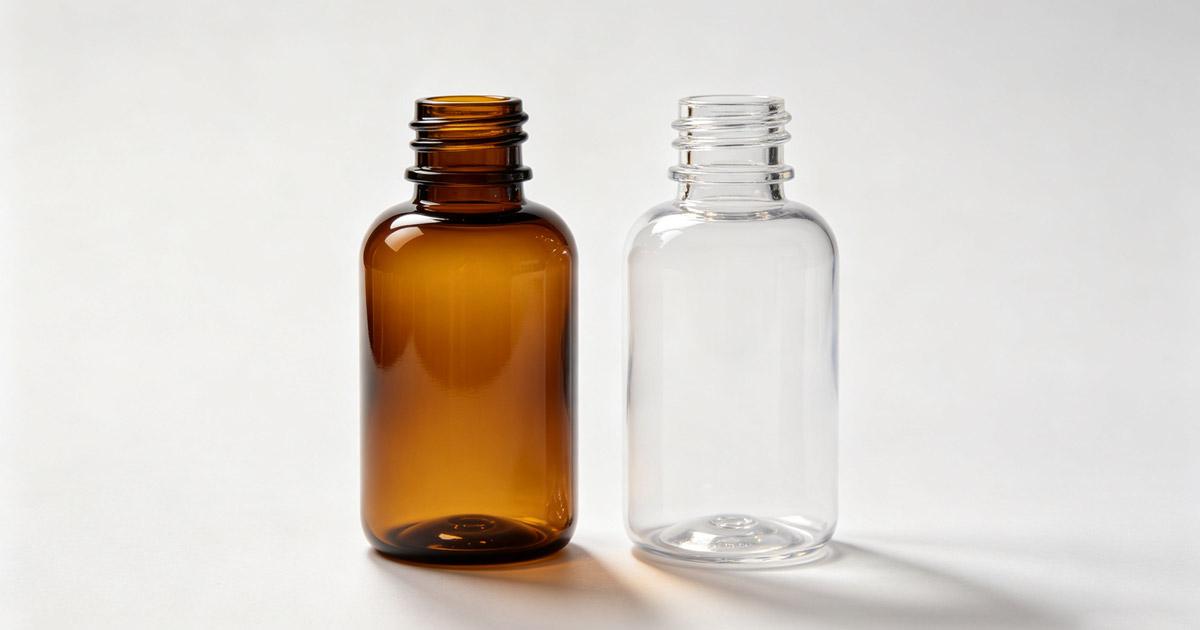
Choosing between amber and clear PET bottles affects more than shelf appearance. It can directly influence how long a cosmetic formula remains stable and effective after it leaves the manufacturing facility. Understanding amber vs clear PET bottles helps brands make packaging decisions that protect both product quality and consumer trust.
Why Light Exposure Matters for Cosmetic Formulas
Many active ingredients in cosmetic formulations degrade when exposed to ultraviolet light over time. Vitamin C, retinol, and certain botanical extracts are particularly sensitive, often losing potency or changing color and odor after extended light exposure. This degradation can affect product performance long before the labeled expiration date, even when a formula is otherwise well preserved.
How Amber PET Bottles Provide Protection
Amber-tinted PET bottles work by filtering out a significant portion of ultraviolet and visible light wavelengths that contribute to ingredient degradation. This makes them a practical choice for formulas containing light-sensitive actives, since the tinting itself does much of the protective work without requiring additional packaging complexity like foil pouches or opaque outer cartons.
When Clear PET Bottles Make Sense
Clear PET bottles suit formulas with more stable ingredient profiles, where light sensitivity is not a significant concern. Many toners, certain lightweight moisturizers, and formulas without highly reactive actives perform well in clear packaging. Clear bottles also offer a marketing advantage for brands wanting to visually showcase formula color, texture, or included botanical elements floating within the liquid.
Balancing Protection With Brand Presentation
Some brands address this tension by pairing a clear or lightly tinted bottle with additional protective measures, such as opaque secondary packaging for retail display, or by formulating with more UV-stable ingredient alternatives where possible. Others choose amber specifically as a visual signal of product potency and premium positioning, turning a functional packaging choice into a marketing asset.
Making the Right Choice for Your Formula
The decision ultimately depends on the specific actives in a formula and how sensitive they are to light exposure. Brands should consult with their formulation chemist to identify which ingredients carry meaningful light sensitivity before finalizing packaging color, rather than choosing based on appearance preferences alone.
Sourcing Considerations
A knowledgeable packaging supplier can advise on the degree of UV protection different amber tint levels provide, since not all amber PET offers identical filtering performance. Buyers should request UV transmission data when comparing options across different suppliers or tint formulations.
Frequently Asked Questions
Do all light-sensitive formulas require amber bottles?
Not necessarily. Some brands manage light sensitivity through opaque secondary packaging or formulation adjustments instead, though amber bottles remain the most direct packaging-level solution.
Does amber tinting affect production cost significantly?
Amber PET typically costs slightly more than clear PET due to the tinting process, though the difference is usually modest relative to overall packaging costs.
Get in Touch
We supply both amber and clear PET cosmetic bottles, with guidance on selecting the right option for your specific formula.
Contact us today to discuss your packaging requirements.