 Skip to content
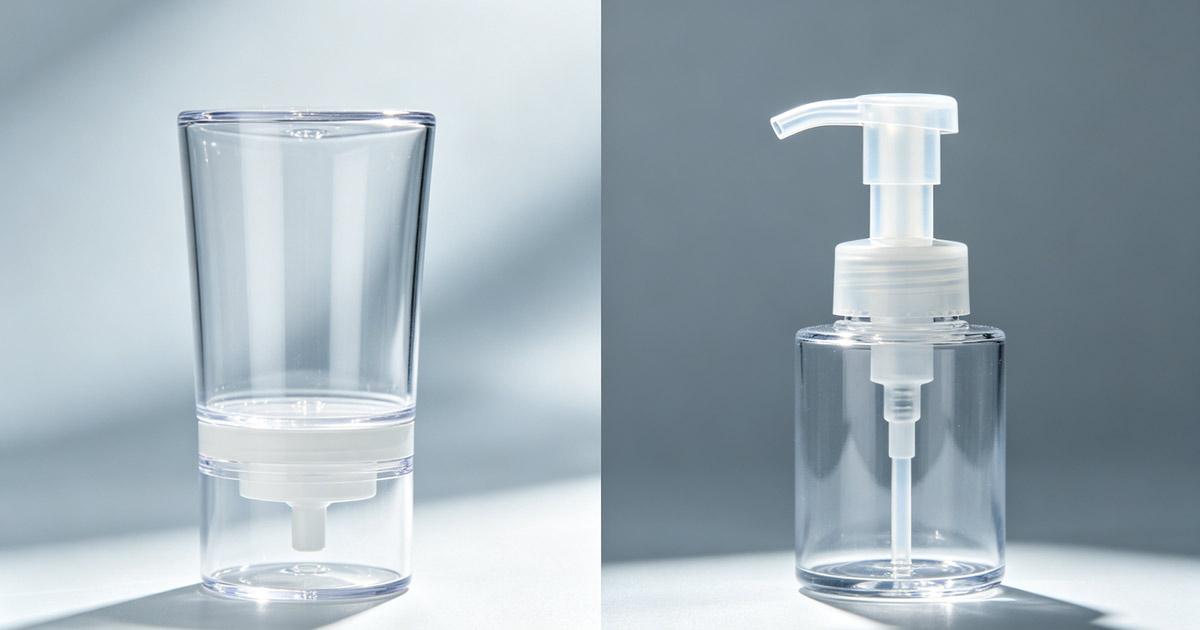
Airless Packaging vs Pump Bottles Comparison
Selecting between airless packaging and standard pump bottles affects formula stability, production cost, and consumer experience differently depending on a product’s specific needs. Comparing airless packaging vs pump bottles helps brands choose the right dispensing mechanism for their formula.
How Standard Pump Bottles Function
Standard pump bottles use a simple mechanical pump with a dip tube that draws liquid up and out with each press. Air enters the bottle to replace dispensed volume, a straightforward, well-established mechanism that works reliably across many formula types at relatively low production cost.
How Airless Packaging Differs
Airless packaging uses a vacuum or piston mechanism that dispenses product without allowing air to enter the container, keeping remaining formula isolated from oxygen exposure throughout the product’s use life. This offers a meaningful stability advantage for oxygen-sensitive formulas but comes with higher production cost and more complex manufacturing requirements.
When Standard Pumps Make Sense
Formulas without significant oxygen sensitivity, including many basic moisturizers, toners, and stable liquid formulations, generally perform adequately in standard pump packaging without meaningful stability loss. For these products, the added cost of airless technology may not translate into a noticeable consumer-facing benefit.
When Airless Packaging Adds Real Value
Formulas containing Vitamin C, retinoids, certain peptides, or other actives known for oxidation sensitivity benefit measurably from airless packaging’s oxygen protection. Premium serums and treatment products, where formula potency directly drives consumer-perceived value, often justify the added packaging investment.
Cost and Production Considerations
Airless mechanisms typically cost more to produce due to more complex engineering and tighter manufacturing tolerances required for reliable piston function. Brands should weigh this cost against their target price point and the actual stability benefit their specific formula requires, rather than assuming airless packaging is universally superior.
Consumer Experience Differences
Standard pumps are broadly familiar to consumers, requiring no adjustment in use. Some airless mechanisms require slightly different pressing technique or may dispense product somewhat differently as the piston moves through the bottle, which brands should consider and potentially communicate if it differs meaningfully from standard expectations.
Making the Right Decision
The choice should begin with formula-specific stability data rather than defaulting to airless packaging as a blanket premium upgrade. Brands should test their specific formula’s actual degradation rate in both packaging types where possible to make an evidence-based decision.
Frequently Asked Questions
Is airless packaging always worth the added cost?
Only when the formula contains genuinely oxygen-sensitive ingredients. For stable formulas, standard pump packaging can perform equally well at lower cost.
Do consumers notice a difference between airless and standard pumps?
Some do, particularly with certain airless designs requiring different pressing technique, so testing consumer response can help brands anticipate any adjustment needed in product education.
Contact Our Team
We supply both airless and standard pump packaging, helping brands choose the right mechanism based on formula-specific needs.
Contact us today to discuss your packaging requirements.