 Skip to content
Pharmaceutical Automation Trends: Integrating Robotics and Continuous Manufacturing
Pharmaceutical automation is transforming the manufacturing landscape by integrating robotics, artificial intelligence, and continuous production technologies. These innovations not only increase operational efficiency but also enhance product quality and regulatory compliance. As global demand for medicines grows, companies are investing in automated systems to meet production needs while reducing human error and contamination risks.
Robotics in Manufacturing
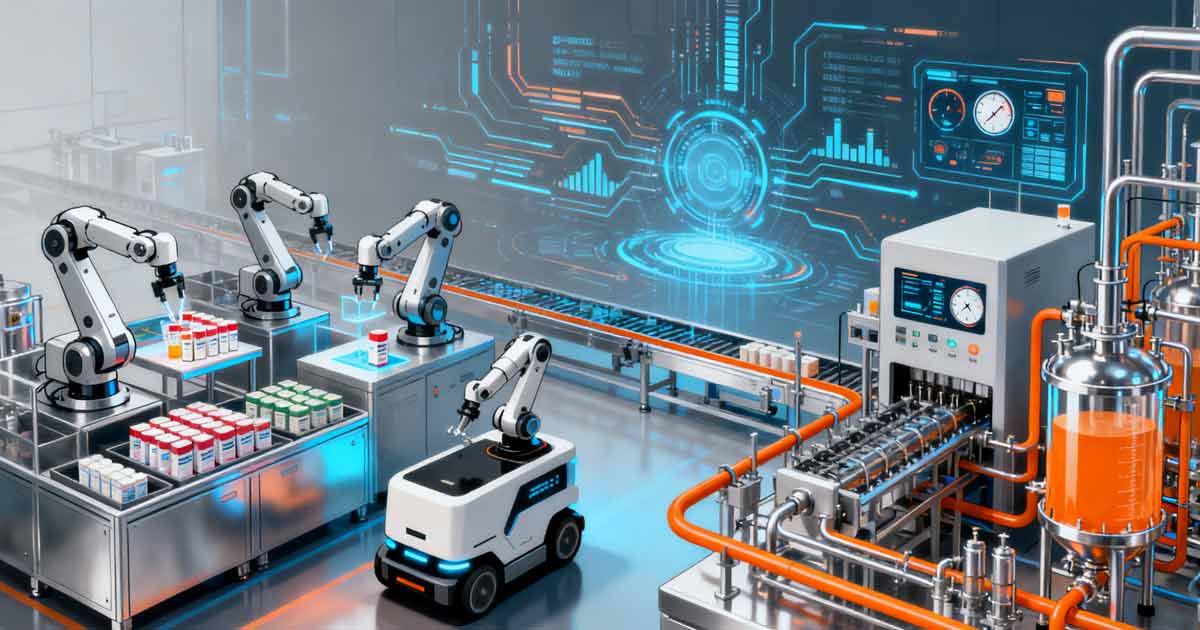
Robotic systems now perform precise, repeatable tasks such as filling, labeling, inspection, and packaging. By minimizing human intervention, these systems reduce contamination risk and improve throughput. Moreover, automation allows manufacturers to scale operations quickly, adapt to changing production requirements, and maintain consistent quality across multiple product lines.
Continuous and Smart Systems
The integration of continuous manufacturing with real-time analytics and IoT-enabled smart systems allows for predictive maintenance, quality monitoring, and seamless process control. These technologies ensure compliance with FDA and EMA standards while reducing downtime and operational costs. Additionally, data-driven insights help optimize resource usage, minimize waste, and support sustainable production practices.
Conclusion
Pharmaceutical automation is shaping the future of drug manufacturing by combining robotics, continuous production, and smart technologies. By adopting these trends, companies can achieve faster, safer, and more reliable operations while maintaining regulatory confidence and meeting the growing global demand for high-quality pharmaceuticals.